AI trading bots are changing markets fast — yet most traders still hold outdated beliefs about automation. Some fear “losing control.” Others think bots magically print money. Both are wrong.
Let’s break down 7️⃣ myths that silently destroy profitability — and what the data really says in AI trading bots.
1️⃣ “Bots remove all emotion — so they’re perfect.”
❌ Myth: If a bot trades for me, emotions disappear.
✅ Reality: AI trading Bots don’t remove emotion — they relocate it. Instead of emotional trades, traders become emotional designers. You start fearing bugs, overfitting, and drawdowns.
The real win is learning emotional detachment from performance, not outsourcing it to code.
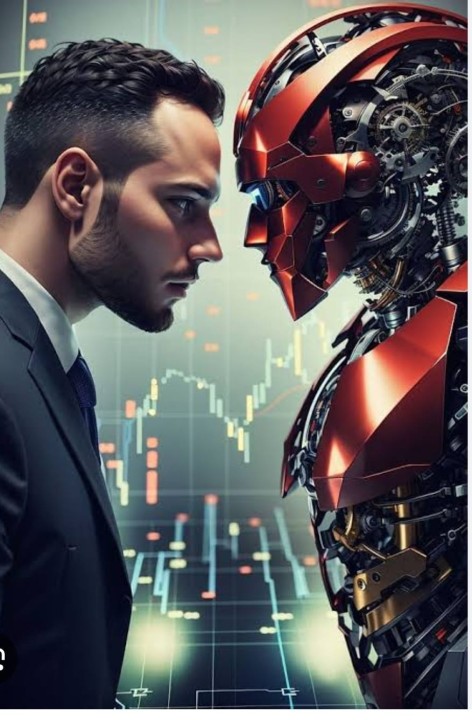
2️⃣ “Manual traders have intuition — AI doesn’t.”
❌ Myth: Humans “feel the market” better than machines.
✅ Reality: AI trading bots don’t feel; they calculate. They find statistical edges humans miss under pressure.
True mastery comes from combining intuition + data, not choosing one over the other.
3️⃣ “Backtests prove everything.”
❌ Myth: A perfect backtest means a perfect future.
✅ Reality: Backtests prove nothing without live data and adaptive filters.
AI trading bots evolve — but only if you feed them fresh inputs and validate results regularly.
In trading, verification beats prediction.
4️⃣ “Bots work 24/7, so they must earn more.”
❌ Myth: More trades = more profits.
✅ Reality: 24/7 execution means 24/7 exposure to bad setups too.
AI doesn’t guarantee alpha — it guarantees activity. Smart traders throttle execution speed and volatility exposure.
The goal isn’t more trades — it’s better-timed ones.
5️⃣ “You don’t need to monitor AI bots.”
❌ Myth: Once deployed, bots run themselves forever.
✅ Reality: Market structure shifts weekly. Liquidity depth, slippage, and latency all change.
Even the best AI model drifts without supervision — that’s why elite quants run live-monitor dashboards and retrain models monthly.
Smart automation = “set, watch, and adapt.”
6️⃣ “Manual traders are slower but safer.”
❌ Myth: Human control avoids flash crashes.
✅ Reality: Manual reflexes lag milliseconds behind the market.
Meanwhile, well-coded AI bots exit trades automatically on risk triggers — faster than any human could.
“Safety” comes from system design, not reaction time.
7️⃣ “AI bots will replace human traders completely.”
❌ Myth: Humans are obsolete.
✅ Reality: AI replaces repetition, not reasoning.
Top funds still rely on human oversight for risk alignment, macro awareness, and strategy evolution.
The future isn’t humans versus AI — it’s humans designing AI that learns faster than fear.
🧠 AI Reality Check
AI trading isn’t magic — it’s mathematics scaled by discipline. Manual trading thrives on intuition; AI thrives on consistency. But the traders who win long-term don’t choose one — they blend both.
When you merge algorithmic precision with human context, you create systems that adapt, not just react.
AI trading bots analyze millions of data points faster than any human could, but they still rely on you to define what matters. You set the boundaries — risk limits, drawdown tolerance, and behavioral rules — while the machine enforces them with perfect discipline.
In practice, the most successful AI traders treat their bots like co-pilots:
they handle pattern recognition, portfolio rebalancing, and execution speed,
while humans remain the architects of logic and intent.
That’s why every evolution in algorithmic trading — from quant desks to retail bots — still depends on one irreplaceable edge: human creativity.
In the future, AI trading bots won’t eliminate human traders; they’ll amplify them — removing emotional bias, speeding execution, and freeing us to focus on what machines can’t simulate: judgment, curiosity, and adaptability.
The next decade belongs to hybrid traders — those who build systems that think with them, not for them.
🔗 Further Reading
- Investopedia — What Is an Algorithmic Trading Bot?
- Cointelegraph — How AI Is Reshaping Crypto Trading
- Algorithmic Trading Psychology: 7 Proven Rules to Think Like a Quant
⚡ CTA: Ready to Build Smarter Bots?
Learn how to train, monitor, and optimize your first AI trading bot safely — start with our guide:
👉 AI Forex Trading Bots: How They Work & The Real Risks